

The number one thing advisors are looking for is clarity about their business for their future. They have a good sense of where they are going, but then face the challenge of achieving their goals because they seem to change, as the industry changes. With all of the regulatory, technology and product pricing changes, it is no wonder that advisors need a deeper sense of clarity around their future.
How Do You Get More Clarity?
Let’s start by examining a simple list of your business goals. Just for fun, take this simple checklist below, and check off the goals you want to accomplish in your financial advisory practice this year.
Goals-Based Business Planning
____ Lifestyle - work-life balance more time off in the next 12 months
____ Growth -Ideal client acquisition acquire more HNW clients
____ Value- Ideal service processes – Deliver more value
What is your main driver for the next quarter? is it growth, value or lifestyle? It would be great to have all three in balance, but prioritize which one is first?
Next, look at the list below and check off what you would like to accomplish in the next quarter, and prioritize it to the top 3 -4 items on the list.
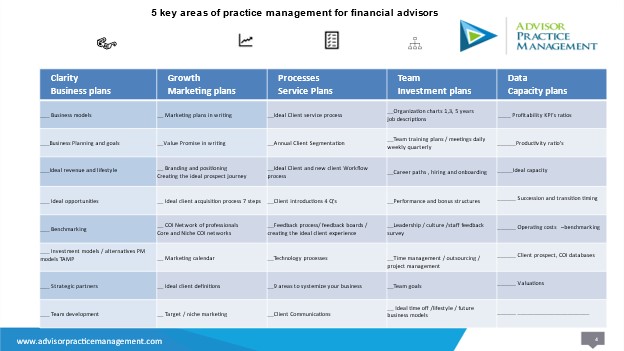
Financial Advisor Practice Management Program (c)
Clarity
____ Business plan on paper – your vision and values
____ Business model – ideal focus – Big goal
____ Data- KPI’s and or benchmarking – key practice data
____ 4 DX 4 disciplines of execution
____ Long-term goals
____ Transition plan
____ Segment – More time with ideal clients
____ Time management – work on business more
____ Valuation know the value and how to increase
Growth
____ Marketing and branding – Creating a clear value promise
____ Delegate – Team to do more / outsourcing
____ Ideal client path now and future
____ Marketing plan and marketing calendar
____ Value promise
____ Strategic partners COI network
____Target marketing fusion marketing
____ Conversations – Practice critical conversations with ideal clients and master
____ Career – education / courses
____ Leadership – Firm or industry leadership roles
____ Less transactional clients
____ More revenue per client
____ Build a deeper Client acquisition process
Value added processes
____ Build a stronger Ideal client experience process
____ Implement Better technology
____ Delegate more and hire more staff support
____ Get better support from strategic partners
____ finally complete a Succession plan in writing and file it away
____ Build better processes
____ Segment clients and prospects
____ Travel for business – attend conferences
Team processes
____ Hiring – Expanding team / associates partners
____ Communications Become a thought leader
____ Team processes
____ Team path -
____ Organizational chart today and future
____ Staff value promise - mission vision values and goals
____ Career path for each team member
____ Team training path
____ Leadership and culture
How many goals do you have for you and your advisory practice? Most advisors I speak to, their goals have changed in the last 3 years. Have your goals changed? Maybe it’s time to update your business goals.
Practice Management Can Help Your Financial Advisory Practice
The average advisor has 6 or more business goals. That is where practice management comes in. Speak to a practice management expert, branch manager, mentor, or coach to help you benchmark your practice so you know where you stand. Then prioritize your business goals, and help you implement strategies to accomplish your business goals. Take this simple checklist, print it out, and the next time you have time to work on your business, use this list as a guide. Share it with your team, your spouse, and other advisors, to help you. Go for it and remember what Albert Einstein said “ The only source of knowledge is experience”. Find someone to help you who has the experience to help you achieve your goals in this great industry.
Would you like a copy of our Comprehensive Practice Management Checklist for financial advisors?
How About Your Goals for Your Practice in 2025?
While each financial advisor's practice may have a different approach, advisors need to understand where their practice needs help, and will they get the right help for the right part of their practice. What areas does your practice need help with?