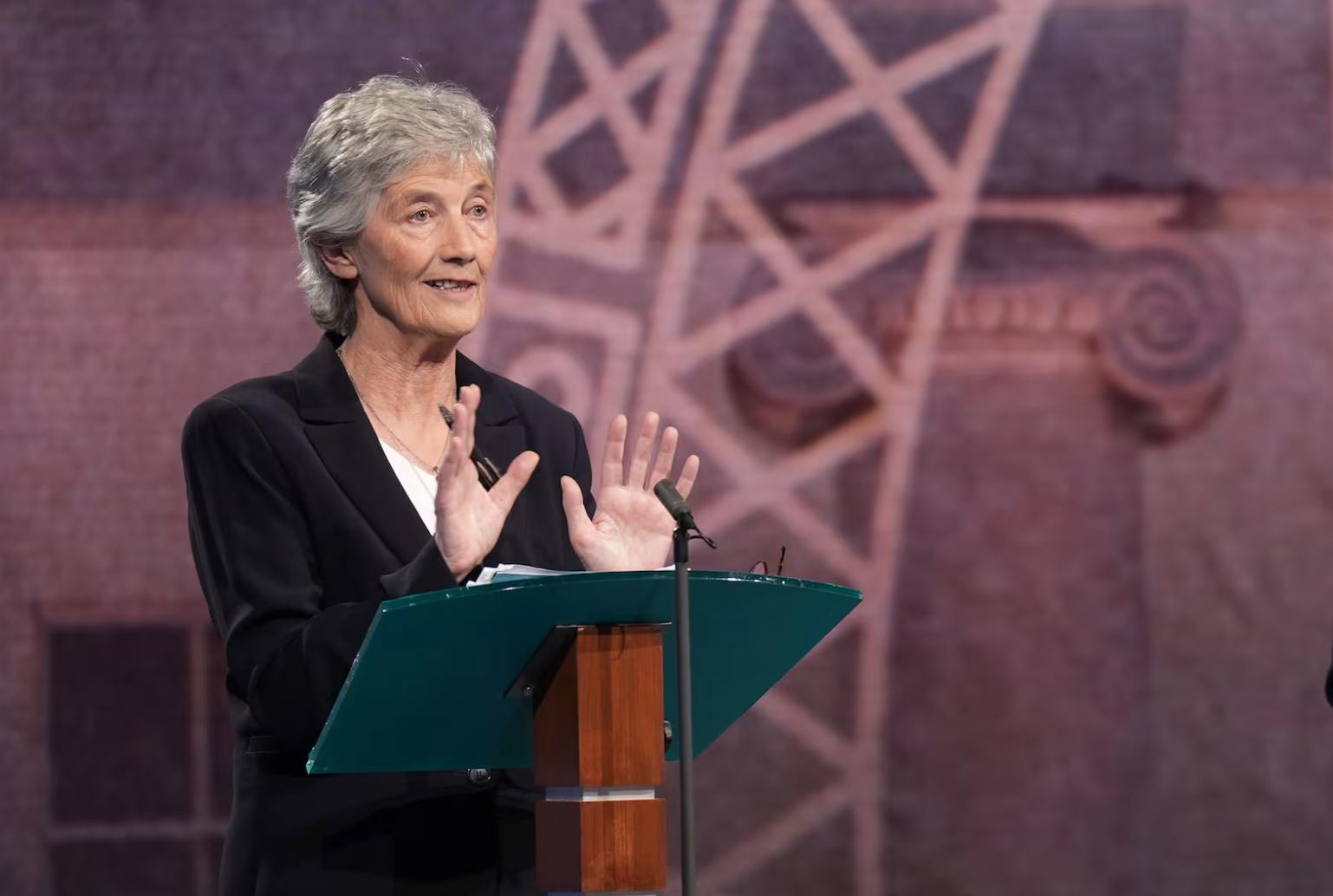

This week, Irish voters nearly fell for democracy's newest trick.
A deepfake video showed Catherine Connolly, candidate for President of Ireland, withdrawing from the race. Not just any deepfake, mind you. This was disturbingly perfect. The voice. The inflections. The mannerisms. All flawlessly mimicked.
An AI-generated journalist even confirmed the "news", declaring the opposition candidate the winner by default.
The video racked up over 30,000 views before the Electoral Commission contacted META directly for removal. Across multiple viral versions, more than 160,000 people watched fiction presented as fact.
Here's What Keeps Me Up at Night
The technical sophistication is alarming, but that's not the real crisis.
First, most viewers believed it. The execution was so precise that people shared it, discussed it, and made decisions based on something that never happened.
Second, even those who spotted the fake are left with something worse than misinformation: doubt. If this can be faked, what else can we trust? Democracy runs on shared reality. Deepfakes are dissolving it.
Third, organisations remain woefully unprepared. We've reached the point where we need AI to protect us from AI, yet most companies haven't grasped this reality.
Fourth, timing is everything. The Electoral Commission acted quickly, but what about the next case? Once a deepfake goes viral, taking it down doesn't un-ring the bell.
Finally, this was entirely predictable. Recent research confirms that whilst financial gain drives most deepfakes, political manipulation ranks in the top three motivations. We knew this was coming. We still weren't ready.
The Innovation Paradox
This week, I've been connecting with colleagues, speaking on how AI is hacking humans. The central question haunting every conversation: How do we innovate with AI without eroding trust?
Because right now, we're sprinting towards an AI-powered future whilst simultaneously destroying our ability to believe anything we see or hear.
The Connolly deepfake isn't an outlier. It's a preview.
A Question for Investors and Founders
Here's the uncomfortable conversation we need to have:
If you're building AI technology, have you mapped how it could be weaponised?
Not in theory. Not in some distant dystopian scenario. Right now. This month. In the next election.
- If you're developing video synthesis tools, who's using them and for what?
- If you're funding voice cloning technology, what safeguards prevent political sabotage?
- If you're creating image generation models, how are you preventing their use in coordinated disinformation campaigns?
The tools that created the Connolly deepfake weren't built with malicious intent. They were likely developed with legitimate use cases: filmmaking, accessibility, creative expression.
But intent doesn't matter when your technology is dismantling the fabric of civil society trust.
Red Teaming Isn't Optional Anymore
Before you launch, before you scale, before you take funding:
- War game how bad actors could abuse your technology
- Build detection capabilities alongside creation tools
- Implement traceable watermarking and provenance systems
- Create rapid response protocols for misuse
- Consider whether "moving fast" is worth breaking democracy
The question isn't "could our technology be misused? " It's "when it is, what did we do to prevent it? "
Because right now, the gap between innovation and safeguarding is measured in ruined elections, destroyed reputations, and eroded public trust.
What This Means for You
Whether you're in leadership, cybersecurity, or simply trying to make sense of the world, the implications are clear:
- Verification systems need rebuilding from the ground up
- Your teams need training to spot sophisticated fakes
- Your incident response plans must include deepfake scenarios
- Your organisation's reputation can be weaponised in seconds
The technology to create these videos is now accessible and affordable. The barriers to creating convincing political deepfakes have collapsed.