
Detroit is having a moment. This summer I wrote about the comeback I felt walking through downtown and cheering at a Tigers game. In that piece, I mentioned both the Tigers and the Lions—because the city’s resurgence is bigger than any single team. I tagged the Lions when I shared it, but let’s be honest: not every brand even throws a “like” when you tag them. I hit publish, closed my laptop, and went back to life.
Then my notifications did something wild.
The Head of Sponsorships for the Detroit Lions read the piece, added me, and invited my husband and me to any home game this fall. Any game. I had to reread it twice. Then I yelled for my husband like I’d just been drafted.
And here’s the kicker: the Lions don’t even need to do this. They had record sales last year. Their house is already packed. But that’s what makes it so powerful. They invest in fans anyway. That is the difference between impressions and impact.
Why This Worked
1) Listening that goes beyond vanity metrics I tagged them, sure. But a lot of brands don’t even acknowledge mentions. The Lions didn’t just notice—they acted. They recognized a genuine fan moment and turned it into a relationship. That is exactly what most B2B brands miss. Stop waiting for people to come to you with a form fill. Your hottest leads are already talking online. . . about their problems, their aspirations, and their wins. Listen closely, then act.
2) Relevance over reach My post wasn’t about football. It was about Detroit. The Lions understood that their brand is bigger than the field. B2B brands need the same instinct: your story is never just about your product, it’s about the ecosystem you power.
3) Speed that surprises Timing is emotional. A fast response turns delight into disbelief, and disbelief into a screenshot you send to your group chat. In B2B, speed turns “just looking” into “let’s book a demo. ”
4) Hospitality as a growth strategy An invitation to a home game is not a swag bag. It is a memory. When brands create memories, they earn loyalty and advocacy. B2B brands can take a page from Will Guidara’s “unreasonable hospitality” playbook: make your prospects feel like insiders before they ever sign a contract.
5) Offline moments that close the loop Digital attention is fragile. A live experience cements it. For B2B, that means turning digital conversations into in-person briefings, workshops, or client councils.
My Detroit Heroes
I’d be remiss if I didn’t say how much I love Sheila Ford Hamp for the way she’s reshaped the Lions with a clear vision and steady leadership. She’s living proof that brand transformation starts at the very top.
And Dan Campbell—“Dan the Coach”—has built one of the most authentic cultures in sports. His now-legendary press conference summed it up:
“We’re going to stand up, and it’s going to take two more shots to knock us down. And on the way up, we’re going to take your other kneecap, and we’re going to get up, and it’s gonna take three shots to get us down. And when we do, we’re gonna take another hunk out of you. ”
That isn’t just a football speech. That’s Detroit. That’s resilience. That’s the ethos every brand should aspire to—grit, heart, and a refusal to stay down.
The ROAR Framework (for Sports and B2B Alike)
Remember it like the mascot.
- R — Respond: Acknowledge real fans and prospects in real time.
- O — Offer: Extend a clear next step that adds value.
- A — Amplify: Share their story, give them credit, and invite others to join.
- R — Repeat: Build a weekly cadence until it’s muscle memory.
What Detroit Is Teaching Brands
Detroit builds things that last. The Detroit Lions are building a playbook for durable love. It’s not about going viral. It’s about being real, fast, and generous in the moments that matter.
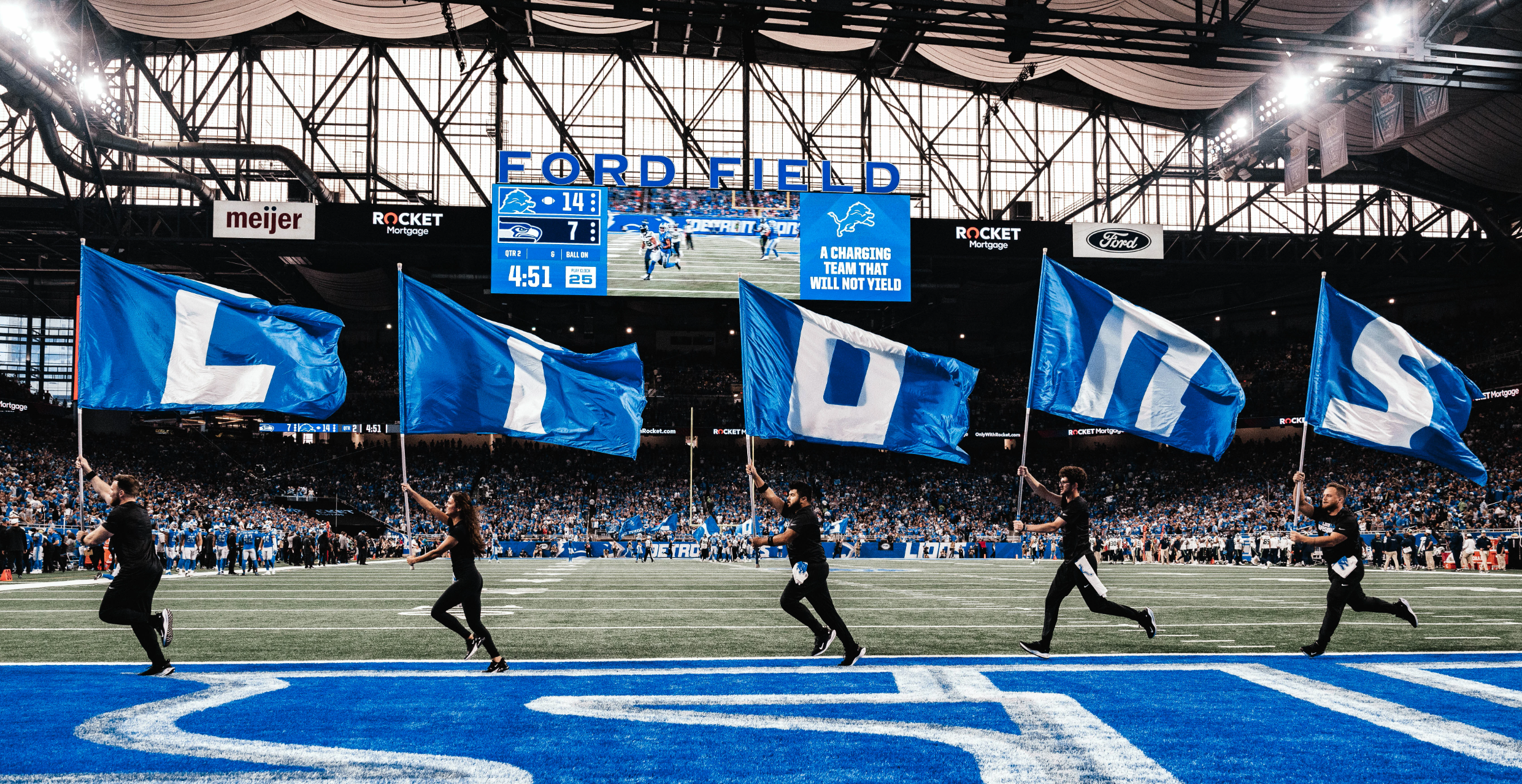
To the Lions team: thank you for the invitation and for the lesson. See you at Ford Field. I’ll be the one grinning ear to ear, probably tearing up during the anthem, and definitely buying too much merch.
Disclosure: The Detroit Lions offered to host my husband and me at a home game after seeing my article about Detroit’s comeback.
If you lead B2B marketing and want to turn passive audiences into active pipeline, stop waiting for forms. Start listening like the Lions. And when the hits come—as they always do—channel your inner Dan Campbell. Stand up, take another shot, and keep moving forward.